
Managing an online grocery store requires organization, accurate product information, and a reliable process for handling customer orders. From updating prices and maintaining stock to arranging product categories and answering customer questions, grocery businesses have many responsibilities to manage every day.
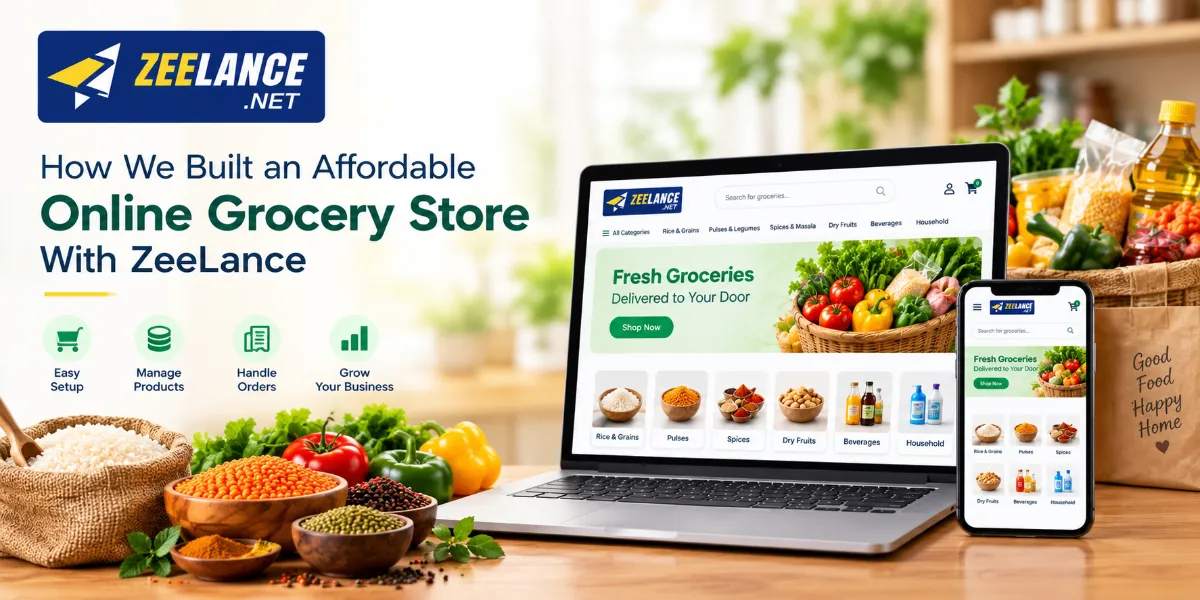
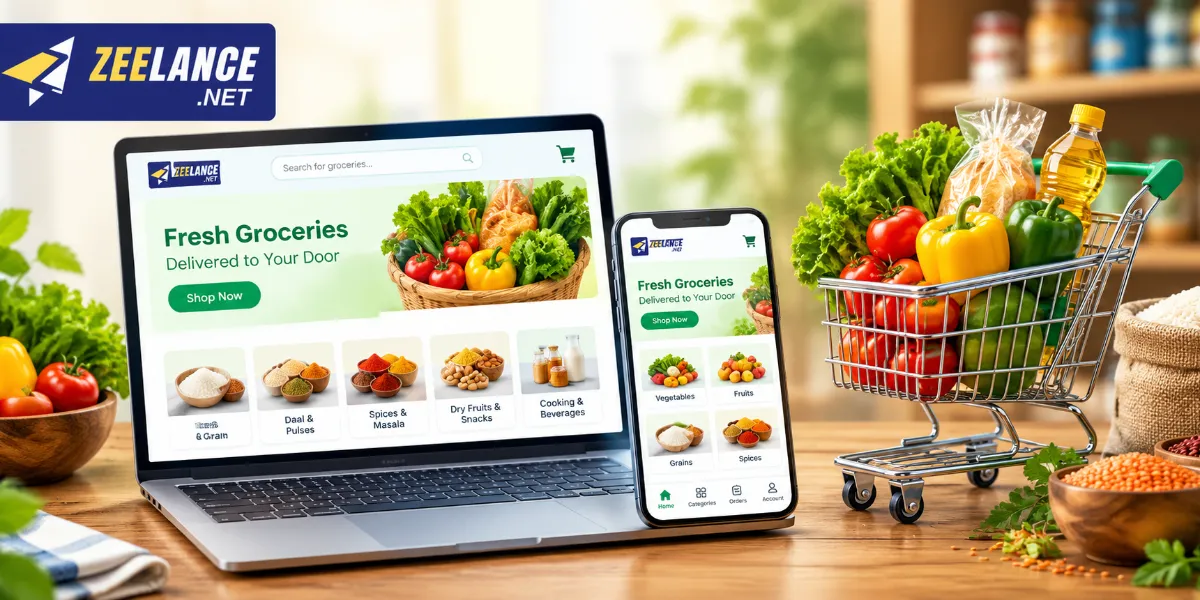
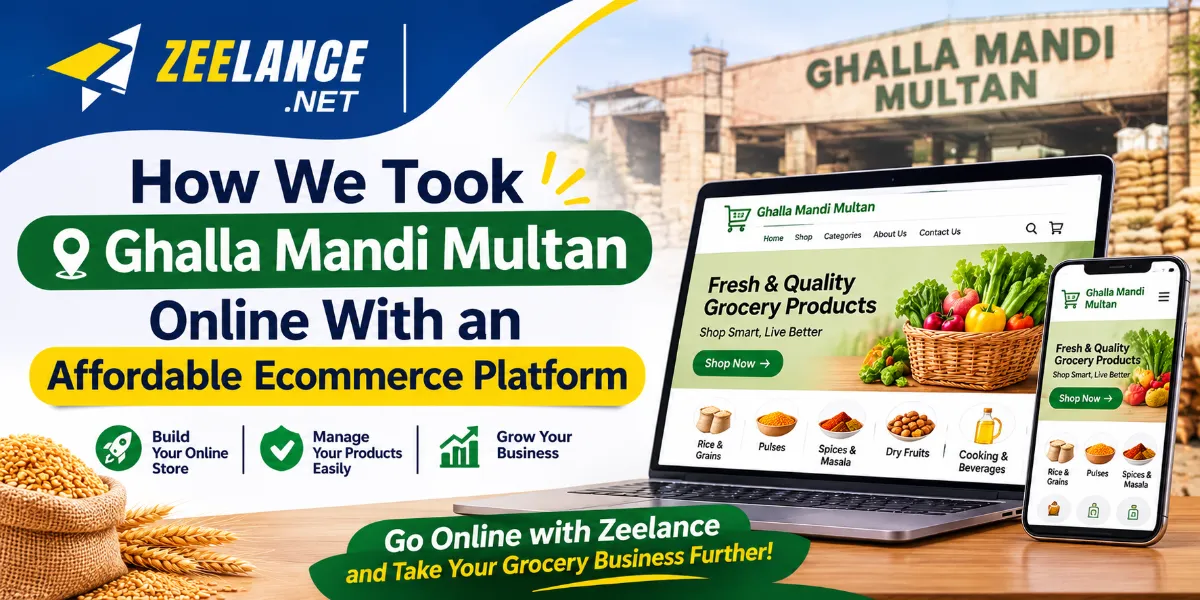
For businesses such as Ghalla Mandi Multan, an online store provides an opportunity to present grocery products in an organized digital catalog. Customers can explore products, review available details, and place orders without needing to visit the physical shop to browse every item.
However, running an online grocery business involves more than creating a website. Business owners need to choose an ecommerce platform that fits their workflow, budget, and customer requirements.
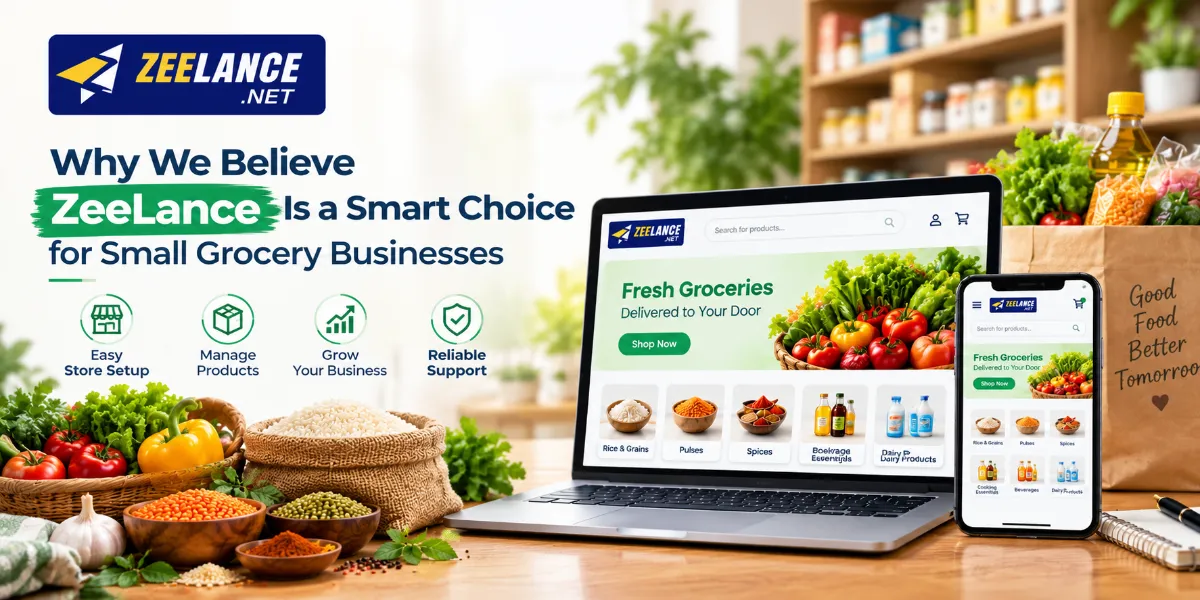
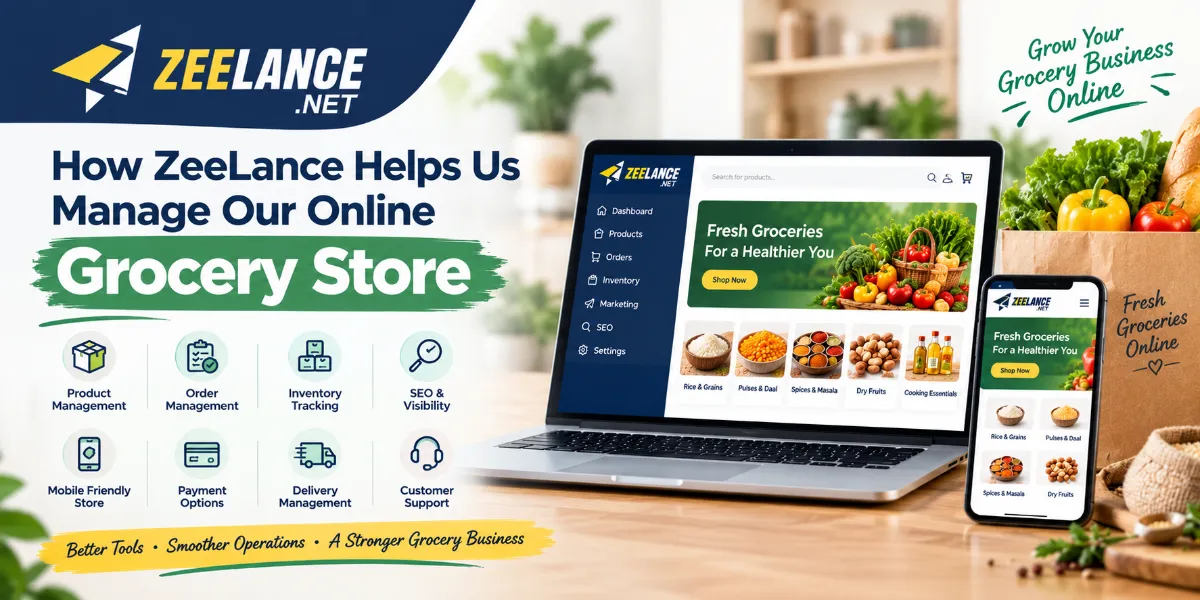
ZeeLance is one platform grocery businesses may consider when evaluating tools for building and managing an online store. Its official website advertises ecommerce features related to store creation, product management, inventory, orders, analytics, and SEO. The availability of individual features and their limitations should be confirmed against the current plan before making a decision.
In this article, we explain how ecommerce tools can support daily grocery store management, which ZeeLance features are worth evaluating, and how businesses can create a more organized online shopping experience.
Register now
1. Why Online Grocery Store Management Matters
A grocery business can offer a wide range of products, including rice, flour, pulses, spices, dry fruits, beverages, and household essentials. Each item needs accurate information, and many products may have different package sizes, prices, and stock levels.
When a business manages everything manually, it can become difficult to keep the website updated as the catalog grows.
Common challenges include:
Keeping stock information accurate.
Organizing products into useful categories.
Communicating delivery information.
Helping customers find the products they need.
A well-chosen ecommerce platform can help centralize some of these activities. Instead of managing every part of the customer journey separately, a business can use the website as a central place for product information and online orders.
The platform does not replace good business processes, but suitable tools can make those processes easier to follow.
2. How ZeeLance Can Support Online Store Management
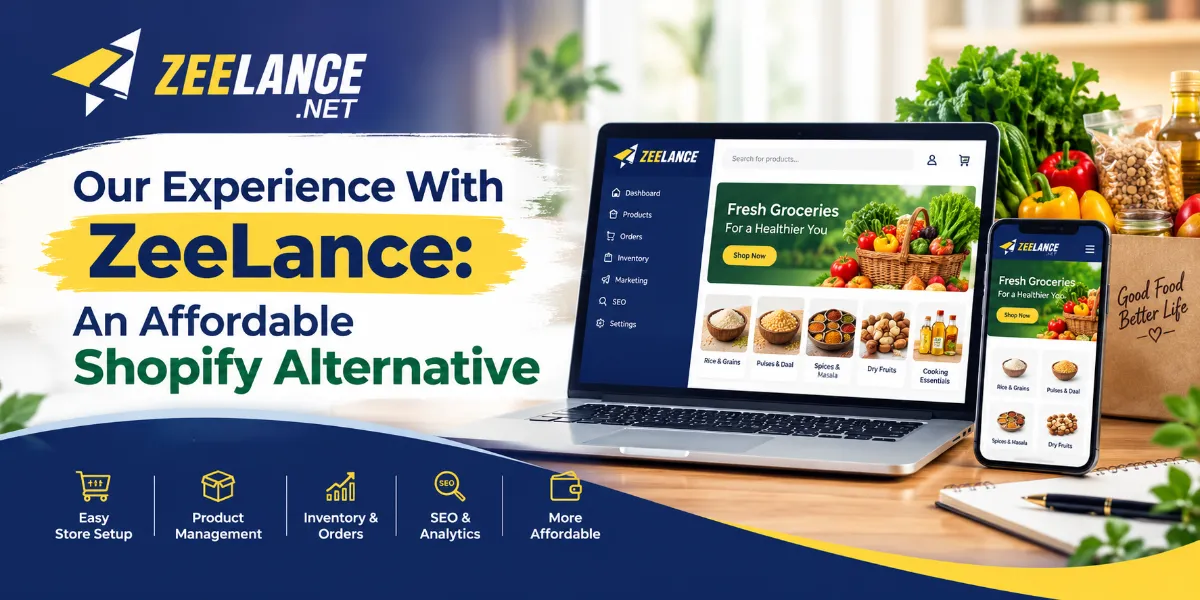
ZeeLance presents itself as an ecommerce platform and an alternative to solutions such as Shopify and WooCommerce. Its official website advertises tools for creating and managing online stores, including features related to products, inventory, orders, and SEO.
These functions are relevant to grocery businesses because they need to manage both a changing product catalog and regular customer orders.
For example, a grocery seller may need to add a new rice variety, update the price of a product, remove an unavailable item from sale, or review the details of a recently received order.
When evaluating ZeeLance, check whether its current package supports these tasks and whether the available interface is practical for your team.
You can explore the platform and its current offerings on the official ZeeLance website.
It is important to distinguish between features a platform advertises and functions that have been tested in your own store. Before publishing claims about your personal experience, confirm that the relevant features have actually been used by your business.
eate online store.
3. Managing Grocery Products in One Organized Catalog
Product management is one of the most important parts of running an online grocery store. Customers need to find products quickly and understand exactly what they are buying.
For Ghalla Mandi Multan, a useful catalog structure can include the following categories:
Daal and Pulses: Different varieties of lentils and pulses.
Rice, Flour and Grains: Rice varieties, flour, and other grains.
Sugar, Spices and Masala: Sugar, spices, and seasoning products.
Dry Fruits, Seeds and Snacks: Dry fruits, seeds, and packaged snacks.
Cooking and Beverages: Cooking essentials, tea, and beverages.
Dairy Products: Available dairy items.
Home and Daily Essentials: Selected household products.
Each product page should include an accurate name, price, photograph, package size, and description. Where relevant, include the brand, ingredients, or other details customers need to make an informed purchase.
When evaluating ZeeLance, test how easily you can add products, edit descriptions, upload images, update prices, and assign items to categories. Also check whether the platform supports different variants, such as multiple package sizes with separate prices.
A well-maintained catalog can reduce confusion and make the store more convenient for customers.
4. Keeping Prices and Product Information Updated
Grocery prices and availability can change because of supplier costs, stock levels, and market conditions. An online store should reflect those changes as accurately as possible.
Outdated product information can create problems when customers place orders based on prices or quantities that are no longer available.
A practical product-update routine should include:
Reviewing current product prices.
Updating package sizes and descriptions where necessary.
Removing or marking unavailable products according to the store's process.
Checking that important product pages display the correct information.
An ecommerce platform may provide tools that make these updates easier. When reviewing ZeeLance, determine how its product editor works and whether it supports the changes your grocery business makes regularly.
For example, if your store sells the same rice variety in several package sizes, check whether each option can have its own price and stock information.
Even with suitable software, someone must be responsible for keeping the catalog accurate. A clear update routine helps the website remain reliable for customers.
Register now
5. Understanding Inventory Management
Inventory management helps a grocery business track which products are available and how much stock remains. This is particularly important when products sell at different speeds or arrive from suppliers at different times.
If inventory is not maintained properly, a store may accept orders for unavailable products or fail to display items that have returned to stock.
ZeeLance advertises inventory-related tools, but grocery sellers should verify the exact functions available in the plan they are considering.
Useful inventory questions include:
Can staff update stock quantities?
Can different product variants have separate stock levels?
Can staff identify low-stock products?
How are cancellations and returned orders reflected in stock?
The answers will help you determine whether the platform fits your inventory workflow.
For a growing grocery business, inventory accuracy is important for both customer satisfaction and daily operations. The best system is one your team can use consistently without unnecessary complexity.
6. Organizing and Tracking Customer Orders
Every online grocery order contains important information, including the products purchased, quantities, customer contact details, payment status, and delivery address.
A clear order-management process helps the business move from receiving an order to preparing and dispatching it.
An effective workflow can include:
Order review: Check the order details and confirm product availability.
Payment verification: Follow the correct process for the selected payment method.
Order preparation: Pick the correct items and quantities.
Final checking: Review the order before packaging.
Dispatch: Arrange delivery according to the business's stated policy.
Customer communication: Provide accurate updates where available.
ZeeLance advertises order-management capabilities. Before relying on these features, test the available order dashboard, status updates, search functions, and any notification options.
Confirm whether the platform supports your actual workflow and whether staff can access the information they need.
Clear procedures are just as important as software. A platform can help organize order information, but the business must still prepare the correct products and communicate accurately with customers.
Create online store
7. Making the Online Shopping Experience Easier
Customers often choose online shopping because they want to save time. If a grocery website is difficult to navigate, they may leave without completing their order.
A customer-friendly store should make it easy to browse categories, view prices, read product details, and move through checkout.
For a grocery business, useful design practices include:
Using readable product photographs.
Keeping categories simple and relevant.
Providing a visible cart and checkout process.
Ensuring that the website works on mobile devices.
Many shoppers use smartphones to browse products, so mobile usability deserves particular attention.
When evaluating ZeeLance, test the website on different screen sizes. Browse several categories, open product pages, add items to the cart, and review the checkout process. If the store accepts online payments, test the payment process using the provider's recommended testing method.
A professional-looking homepage is useful, but the complete shopping journey should also be straightforward.
Register now
8. Displaying Clear Delivery and Payment Information
Grocery customers should understand how an order will reach them before completing a purchase. Delivery information should explain the service area, charges, minimum order requirements, and expected delivery time.
Ghalla Mandi Multan has provided these customer-facing business terms:
Free delivery within Multan City.
Minimum order value of PKR 5,000.
Cash on delivery, cards, and online bank transfer as listed payment methods.
These details should be published only while they remain accurate and applicable. Any exceptions or limitations should also be explained clearly.
When evaluating an ecommerce platform, check whether its checkout and shipping settings can accommodate the business's requirements. Confirm that the payment methods you want to offer are supported for your business in Pakistan and understand any related fees or eligibility conditions.
If a platform cannot support an essential delivery rule or payment method, that limitation should be considered before choosing a plan.
9. Using SEO to Attract Relevant Grocery Customers
Register now
Search engine optimization, or SEO, helps search engines understand website content and can help customers discover relevant pages through organic search.
For an online grocery store, SEO includes more than adding keywords to the homepage. Product pages, category pages, images, and helpful articles can all contribute to the website's overall usefulness.
Here are practical steps to follow.
Create descriptive page titles
Use titles that clearly describe each category or product. Avoid repeating the same title across unrelated pages.
Write original product descriptions
Provide accurate information about the product, its variety, package size, and other relevant details.
Optimize category pages
Organize rice, pulses, spices, dry fruits, and other grocery products into clear sections. Add useful introductory text where it helps shoppers.
Improve image information
Use appropriately sized photographs and descriptive file names. Add meaningful alternative text where the platform supports it.
Publish useful blog articles
Create articles about selecting rice, storing dry groceries, understanding different pulses, and planning household grocery purchases.
Review website performance
Use appropriate analytics and search tools to understand which pages attract visitors and which may need improvement.
ZeeLance advertises SEO-related features, but you should verify the exact controls available in your plan, such as editable page titles, meta descriptions, URLs, and image alternative text.
SEO tools do not guarantee high rankings. Content quality, competition, technical setup, and user experience all matter.
For official guidance, consult Google's SEO Starter Guide.
10. Using Analytics to Make Better Business Decisions
Analytics can help grocery businesses understand how people interact with their website. Depending on the tools available, a store owner may be able to review visitor activity, popular products, and other performance indicators.
These insights can help identify possible improvements.
For example, if a category attracts many visits but few orders, the business may need to review product information, pricing, delivery terms, or checkout usability.
If customers frequently visit a particular product page, it may be worth ensuring that its photographs and description are accurate and that stock information is up to date.
ZeeLance advertises analytics and marketing-related features, but the specific reports and integrations available should be confirmed before purchase.
When using analytics, distinguish between website activity and business results. A high number of visits does not necessarily mean a high number of sales. Use reliable information to identify problems and test improvements over time.
11. Supporting Marketing and Customer Communication
For example, a business can share product updates, grocery offers, new arrivals, and useful shopping tips. Links can direct interested customers to the relevant category or product page.
Customer communication is also important after an order is placed. Customers may need confirmation, delivery information, or help resolving a product-related question.
Before choosing ZeeLance, check whether the selected plan supports the marketing integrations and communication tools your business needs. Confirm which functions are included and whether additional services or subscriptions are required.
Avoid assuming that every integration is available by default. A practical evaluation should focus on the tools your business will actually use.
12. Is ZeeLance the Right Choice for Your Grocery Store?
The right ecommerce platform depends on the size of your catalog, budget, operating process, technical requirements, and future plans.
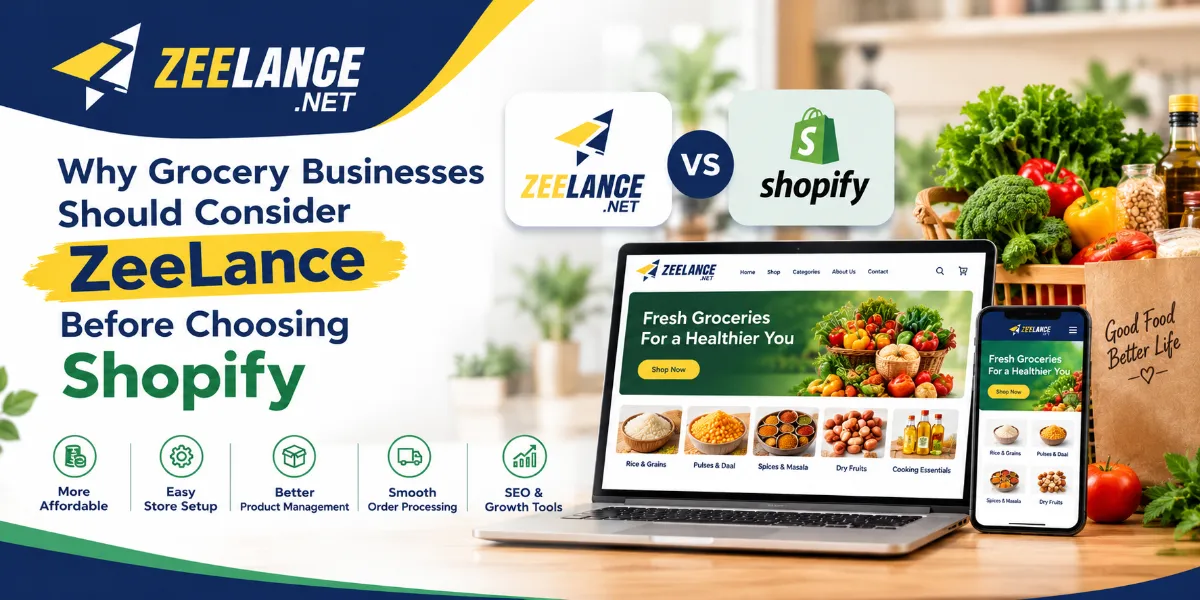
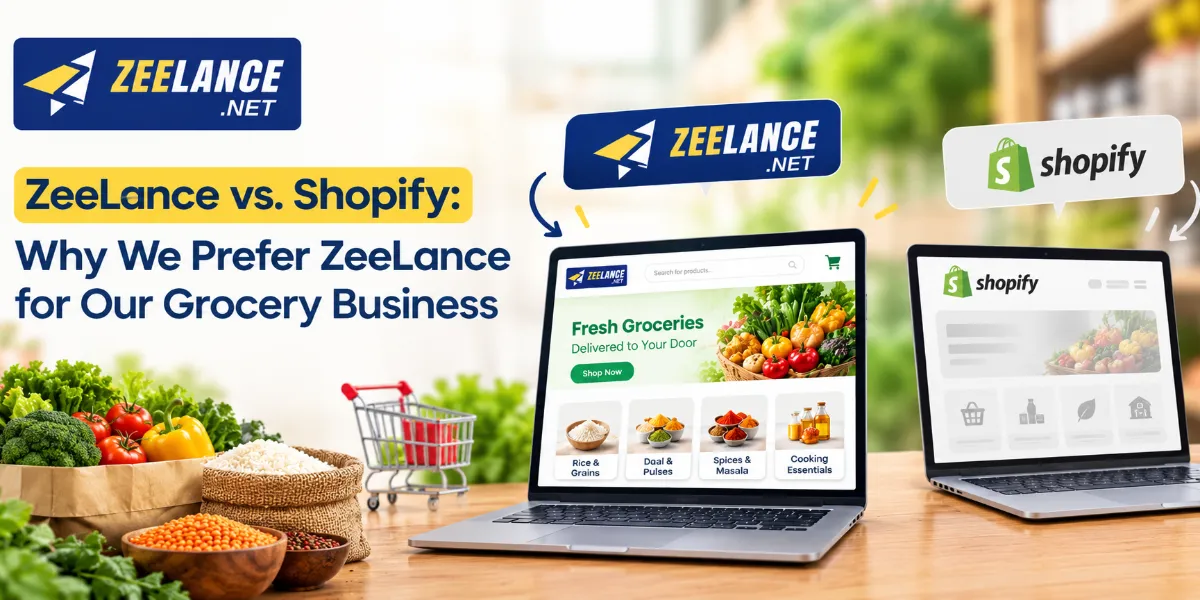
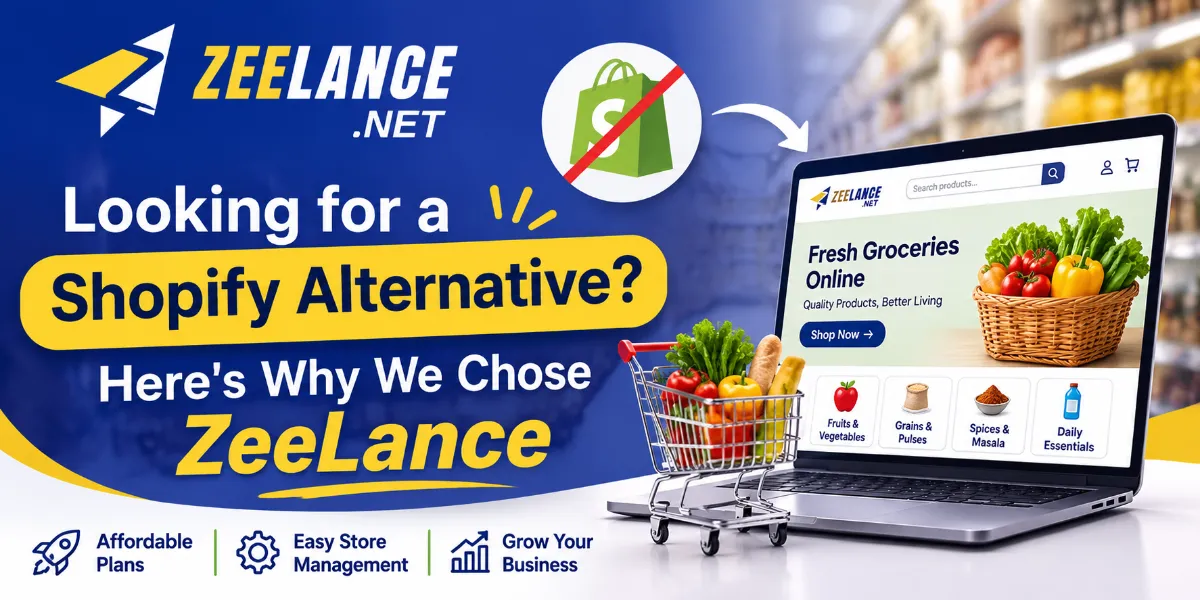
ZeeLance may be worth considering if its current tools and package structure match your needs. However, compare it with Shopify and other relevant platforms before making a final decision.
Use this checklist:
Review the current subscription and renewal costs.
Test product creation and category management.
Confirm inventory and order-management capabilities.
Verify payment methods available in Pakistan.
Test delivery and minimum-order settings.
Review SEO controls and analytics.
Test the mobile shopping experience.
Understand how product and order data can be exported.
If a demonstration or trial is available, test the platform with a small sample of your actual grocery products. This can help you identify limitations before investing time and money in the complete store.
Create online store
Conclusion
Managing an online grocery store involves product organization, price updates, inventory control, order processing, customer communication, and marketing. A suitable ecommerce platform can help bring some of these tasks together and make the shopping experience easier for customers.
ZeeLance is worth evaluating because its official website advertises store-building, product-management, inventory, order-management, analytics, and SEO features. However, the suitability of these tools depends on their current availability, plan limitations, pricing, and compatibility with your business requirements.
For Ghalla Mandi Multan, the best approach is to test the functions needed for daily operations and compare the total cost with Shopify and other alternatives. Choose a platform based on verified capabilities rather than assumptions or promotional claims.
A successful online grocery store needs more than technology. Accurate product information, organized stock records, transparent delivery policies, useful content, and reliable customer service remain essential to building customer trust.
By combining appropriate ecommerce tools with consistent business processes, grocery sellers can create a more organized online shopping experience and build a stronger foundation for long-term growth.
Frequently Asked Questions
1. How can ZeeLance help manage an online grocery store?
ZeeLance advertises ecommerce tools related to store creation, product management, inventory, order management, analytics, and SEO. Confirm the availability and limitations of the relevant features in your chosen plan.
2. Can I manage grocery products and categories online?
Yes. Ecommerce platforms commonly allow sellers to organize products into categories and maintain product details. Check the selected platform's support for product variations, package sizes, pricing, and stock information.
3. Is ZeeLance a Shopify alternative?
ZeeLance presents itself as an alternative to Shopify and WooCommerce. Compare current prices, features, integrations, payment compatibility, support, and migration options before deciding which platform is more suitable.
4. How can I improve my grocery website's SEO?
Create useful category pages, write original product descriptions, use descriptive page titles, optimize images, publish relevant blog content, and monitor search performance. Rankings are not guaranteed.
5. Can I accept online grocery orders in Pakistan?
Yes, if your chosen platform and payment arrangements support your business. Confirm payment-provider availability, eligibility, transaction fees, and any technical requirements before launching.
6. What should I check before choosing an ecommerce platform?
Review the complete cost, product management, inventory, order processing, payment options, delivery settings, SEO controls, mobile usability, customer support, and data-export options.
7. Where can I learn more about ZeeLance?
Visit the official ZeeLance website for its current offerings and package details. Compare them with the official Shopify pricing page before making a decision.
Register now