
How Often Should You Change Motorcycle Engine Oil?
Motorcycle engine oil is essential for keeping an engine properly lubricated, reducing friction, controlling heat and supporting reliable performance. Whether you use your motorcycle for daily commuting, business deliveries or long-distance travel, changing the engine oil at the correct time is an important part of routine maintenance.
Many motorcycle owners ask the same question: how often should motorcycle engine oil be changed? The answer depends on several factors, including the motorcycle model, engine design, oil type, riding conditions and the manufacturer's recommended service schedule. There is no single oil-change interval that is suitable for every motorcycle.
Changing engine oil too late may allow contaminants and worn-out oil to affect engine components. On the other hand, changing it more frequently than necessary can increase maintenance costs without providing meaningful benefits. Understanding your motorcycle's requirements can help you maintain the right balance.
Why Is Motorcycle Engine Oil Important?
Motorcycle engine oil performs several important functions while the engine is running. Its primary purpose is to create a protective lubricating film between moving metal components, helping reduce direct contact and friction.
Depending on the motorcycle's design, engine oil may also lubricate the gearbox and work alongside a wet clutch system. This makes choosing the correct motorcycle oil particularly important.
Here are some major functions of motorcycle engine oil:
Supports temperature control: Oil carries heat away from certain engine components, helping manage operating temperatures.
Protects against wear: Proper lubrication helps reduce wear on components such as pistons, bearings and other moving parts.
Helps clean the engine: Detergent and dispersant additives help manage deposits and keep contaminants suspended until the oil is replaced.
Protects against corrosion: Suitable engine oil helps protect internal metal surfaces from corrosion.
Supports gearbox operation: In motorcycles where the engine and gearbox share oil, the lubricant also supports gear operation.
Because motorcycle engine oil performs multiple functions, using the correct oil and following the recommended replacement schedule are both important.
How Often Should You Change Motorcycle Engine Oil?
The correct oil-change interval should always be based on the motorcycle manufacturer's recommendations. Different motorcycles have different engine designs, oil capacities and lubrication requirements.
Some motorcycles require an early first oil change after the initial running-in period. After that, the manufacturer may recommend oil replacement at specific mileage intervals or service periods.
For example, a motorcycle used for short daily journeys in heavy traffic may experience different operating conditions from one used mainly for longer rides on open roads. Similarly, an older motorcycle may have different maintenance requirements from a newer model.
To determine the correct interval:
Check the owner's manual for the recommended oil-change mileage or time period.
Follow the first-service instructions for a new motorcycle.
Consider the type of riding and operating conditions.
Use an engine oil that meets the required viscosity and performance specifications.
Ask a qualified motorcycle mechanic if you are unsure about the correct service schedule.
Do not rely on a single mileage figure shared by another motorcycle owner. Their motorcycle, engine condition and riding habits may be different from yours.
Factors That Affect Motorcycle Engine Oil Change Intervals
Several factors influence how quickly motorcycle engine oil may deteriorate. Understanding these conditions can help you follow an appropriate maintenance routine.
1. Motorcycle Manufacturer Recommendations
The manufacturer's service schedule should be your starting point. Motorcycle manufacturers test their engines and specify suitable maintenance intervals based on the engine's design and operating requirements.
Always check the owner's manual before deciding when to replace the oil. If your motorcycle has been modified or has a different operating history, seek advice from a qualified mechanic.
2. Daily Riding Distance
How far you ride each day can influence your maintenance requirements. A motorcycle used for frequent commuting may accumulate mileage quickly and require regular servicing.
However, mileage is not the only factor. A motorcycle that is frequently started for very short journeys may not always reach its normal operating temperature. Depending on the conditions, moisture and fuel-related contaminants may accumulate in the oil.
Keep track of both mileage and time since the previous oil change.
3. Heavy Traffic and Frequent Stops
Riding in congested city traffic can place different demands on a motorcycle compared with riding on open roads.
Frequent acceleration, braking, idling and low-speed operation may increase engine operating stress. In hot weather, traffic congestion can also make cooling more challenging, particularly when airflow through the engine is limited.
If you regularly ride in heavy traffic, check whether your motorcycle manufacturer recommends a shorter service interval for severe operating conditions.
4. Dusty and Dirty Roads
Dusty roads and environments with high levels of airborne particles can increase the maintenance demands on your motorcycle.
A properly maintained air filter helps prevent dust from entering the engine. If the air filter is damaged, incorrectly fitted or excessively dirty, contaminants may reach internal engine components.
Check and clean or replace the air filter according to the manufacturer's instructions. Do not assume that changing engine oil alone can solve problems caused by poor air filtration.
5. Engine Oil Quality and Specification
Not all motorcycle engine oils are the same. They can differ in viscosity, base oil composition, additive formulation and performance classification.
Using an oil that does not meet your motorcycle's requirements may affect lubrication and overall operation. Always check the recommended SAE viscosity grade and applicable API or other manufacturer-required specifications.
A more expensive oil is not automatically the correct choice. Compatibility with the motorcycle is more important than selecting a product based only on its price or marketing claims.
6. Riding Style and Engine Load
Aggressive acceleration, frequent high engine speeds, carrying heavy loads and long journeys under demanding conditions can increase engine stress.
If you regularly ride with a passenger, carry cargo or travel through challenging routes, check the maintenance guidance for your motorcycle's operating conditions.
Smooth acceleration, appropriate gear selection and regular servicing can help support better engine maintenance.
What Happens If You Delay a Motorcycle Engine Oil Change?
Engine oil gradually changes during use. It is exposed to heat, pressure, combustion-related contaminants and mechanical activity. Over time, its protective properties may decline.
If engine oil is not replaced according to the recommended schedule, several problems may develop.
Increased Engine Friction
Engine oil helps separate moving metal surfaces. When lubrication becomes inadequate, friction and component wear may increase.
This can affect important engine parts and may contribute to expensive repairs if the problem is ignored.
Sludge and Deposit Formation
Used oil can contain contaminants and oxidation products. If maintenance is neglected, deposits may accumulate in parts of the lubrication system.
Regular oil changes using the correct specification help manage contamination and support cleaner engine operation.
Poor Engine Performance
Old or unsuitable oil may affect how smoothly an engine operates. A rider might notice unusual engine noise, rough operation or changes in performance.
These symptoms do not always indicate an oil problem. Other components may also be responsible, so a proper inspection is recommended.
Increased Engine Temperature
Engine oil helps carry heat away from certain internal components. If the oil level is too low or the oil is unsuitable, lubrication and heat management may be affected.
If your motorcycle repeatedly overheats, do not simply replace the oil and continue riding. Have the cooling system, lubrication system and other relevant components inspected.
Potential Engine Damage
Ignoring oil maintenance for an extended period can increase the risk of serious engine wear. In severe cases, inadequate lubrication may contribute to major mechanical damage.
Following the recommended service schedule is generally less costly than dealing with avoidable engine repairs.
How to Check Motorcycle Engine Oil Correctly
Checking the engine oil level is a simple maintenance task, but the correct method varies between motorcycle models.
Some motorcycles use a dipstick, while others have an oil-level inspection window. The motorcycle may also need to be positioned upright or placed on its centre stand during the check.
Follow these general steps, while prioritising your owner's manual:
Park the motorcycle on a stable, level surface.
Follow the manufacturer's instructions about whether the engine should be warm or cold.
Position the motorcycle as specified in the manual.
Use the dipstick or inspection window to check the oil level.
Confirm that the level is within the recommended range.
If the oil level is low, add the correct oil gradually.
Recheck the level and avoid overfilling.
Never assume that every motorcycle uses the same checking procedure. Some dipsticks should be placed without screwing them in, while others require a different method.
If you notice repeated oil-level drops, investigate the cause. Possible reasons include leakage, oil consumption or other mechanical issues.
Does Motorcycle Engine Oil Colour Tell You When to Change It?
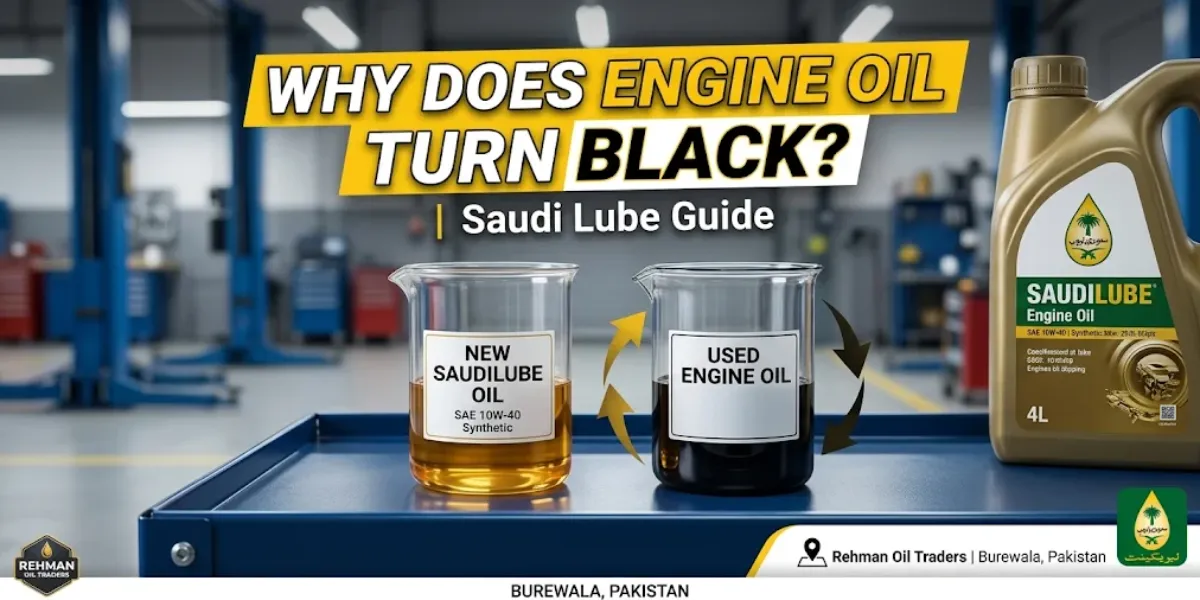
Oil colour can change during normal engine operation. Depending on the engine and oil formulation, fresh oil may gradually become darker as it collects contaminants and combustion-related deposits.
However, colour alone is not a reliable way to determine whether motorcycle engine oil needs replacement.
Consider these points:
Dark oil does not automatically mean that it has lost all its useful properties.
Clean-looking oil does not necessarily mean that it is still suitable for continued use.
A burnt smell, unusual consistency or visible contamination may justify further inspection.
Milky or creamy oil may indicate moisture or coolant contamination, depending on the motorcycle's design.
Follow the manufacturer's replacement schedule rather than waiting for the oil to look dirty. If you notice an unusual appearance or smell, have the motorcycle inspected.
Choosing the Right Engine Oil for Your Motorcycle
Selecting the correct motorcycle engine oil is just as important as changing it on time.
Before purchasing oil, check the specifications recommended in your motorcycle's owner's manual.
Understand SAE Viscosity Grades
SAE viscosity grades describe how an oil behaves at different temperatures. Motorcycle oils are available in different grades, and the correct choice depends on the engine design and manufacturer recommendations.
For example, Saudi Lube offers motorcycle oil options in the following grades:
SAE 20W-50: Available in Saudi Lube SL-Sumama API SG motorcycle engine oil.
SAE 20W-40: Available in Saudi Lube SL-Sumama API SF motorcycle engine oil.
These products have different viscosity grades and API classifications. The correct option depends on the requirements of your particular motorcycle.
Do not choose an oil grade simply because it is popular in your area or recommended by another rider. Always confirm compatibility first.
Check the API Classification
API classifications help identify engine oil performance categories. The required classification depends on the motorcycle manufacturer's specifications.
Saudi Lube SL-Sumama motorcycle engine oil is available in:
SL-Sumama API SG SAE 20W-50.
SL-Sumama API SF SAE 20W-40.
Check your motorcycle manual to confirm which classification and viscosity grade are suitable. Do not assume that a higher or different classification is automatically compatible with every motorcycle.
Consider Wet Clutch Compatibility
Many motorcycles use a wet clutch, where the clutch operates in an oil bath. In these motorcycles, the engine oil may also affect clutch operation.
Using unsuitable automotive engine oil can sometimes cause clutch slipping or other operating problems, depending on its formulation.
Check whether your motorcycle requires a specific motorcycle oil standard, such as JASO MA or MA2. Use an oil that meets the required specification.
Common Motorcycle Engine Oil Maintenance Mistakes
Even riders who regularly service their motorcycles can make mistakes that affect engine maintenance.
Avoid these common problems:
1. Ignoring the owner's manual: Every motorcycle has specific maintenance requirements. Do not follow an oil-change schedule without checking your model's recommendations.
2. Using the wrong viscosity: An unsuitable viscosity grade may not provide the lubrication characteristics required by the engine.
3. Overfilling the engine: Adding too much oil can create operating problems. Always maintain the level within the manufacturer's specified range.
4. Using unsuitable car engine oil: Some automotive oils may not be suitable for motorcycles with shared engine and gearbox lubrication or wet clutches.
5. Ignoring oil leaks: Oil around the engine, drain plug or other components should be investigated. Repeatedly topping up without fixing a leak is not a proper solution.
6. Forgetting the oil filter: Some motorcycles have replaceable oil filters, while others use different filtration arrangements. Follow the manufacturer's filter inspection and replacement instructions.
7. Buying oil without checking specifications: Packaging, price and brand recognition are not enough. Confirm that the product meets your motorcycle's requirements.
Why Regular Motorcycle Servicing Matters
Engine oil is only one part of motorcycle maintenance. A motorcycle needs regular inspection to help maintain safe and reliable operation.
Along with checking the oil, pay attention to:
Air filter condition.
Chain lubrication and adjustment.
Brake pads and brake fluid.
Tyre pressure and tyre condition.
Spark plug condition.
Battery and electrical connections.
Clutch operation.
Engine oil leaks.
Cooling system, where applicable.
A consistent maintenance routine helps identify developing problems before they become more serious. Keep a record of service dates, mileage, oil grade and filter replacements. This makes it easier to follow the next service interval.
Frequently Asked Questions About Motorcycle Engine Oil Changes
How often should I change motorcycle engine oil?
The correct interval depends on your motorcycle model, engine design, oil specification and riding conditions. Follow the service schedule in your owner's manual rather than relying on a universal mileage recommendation.
Can I ride my motorcycle if the engine oil is low?
Riding with an oil level below the recommended range can increase the risk of inadequate lubrication and engine damage. Check the level and add the correct oil according to the manual. If the oil level drops repeatedly, have the motorcycle inspected.
Can car engine oil be used in a motorcycle?
Not always. Some motorcycles have wet clutches and shared engine and gearbox lubrication. Certain automotive oils may not meet the requirements of these systems. Always use oil that meets the specifications stated in your motorcycle manual.
Should I change motorcycle oil based only on its colour?
No. Oil colour alone does not accurately indicate its remaining service life. Follow the manufacturer's service schedule and investigate unusual smells, contamination or changes in oil consistency.
Is SAE 20W-50 suitable for every motorcycle?
No. SAE 20W-50 is suitable only for motorcycles whose manufacturers permit or recommend that viscosity grade. Always check the owner's manual before selecting an oil.
What happens if I use the wrong motorcycle engine oil?
Using an unsuitable oil may affect lubrication, engine operation and, in some motorcycles, wet-clutch performance. It is important to select the correct viscosity and performance specification.
Do I need to change the oil filter with every oil change?
This depends on the motorcycle manufacturer's maintenance instructions and the type of filtration system fitted to the motorcycle. Follow the recommended inspection and replacement schedule.
Is motorcycle engine oil different from car engine oil?
It can be. Motorcycle oils may need to meet additional requirements because some motorcycle engines share lubrication with the gearbox and wet clutch. Always check the specifications required by your motorcycle.
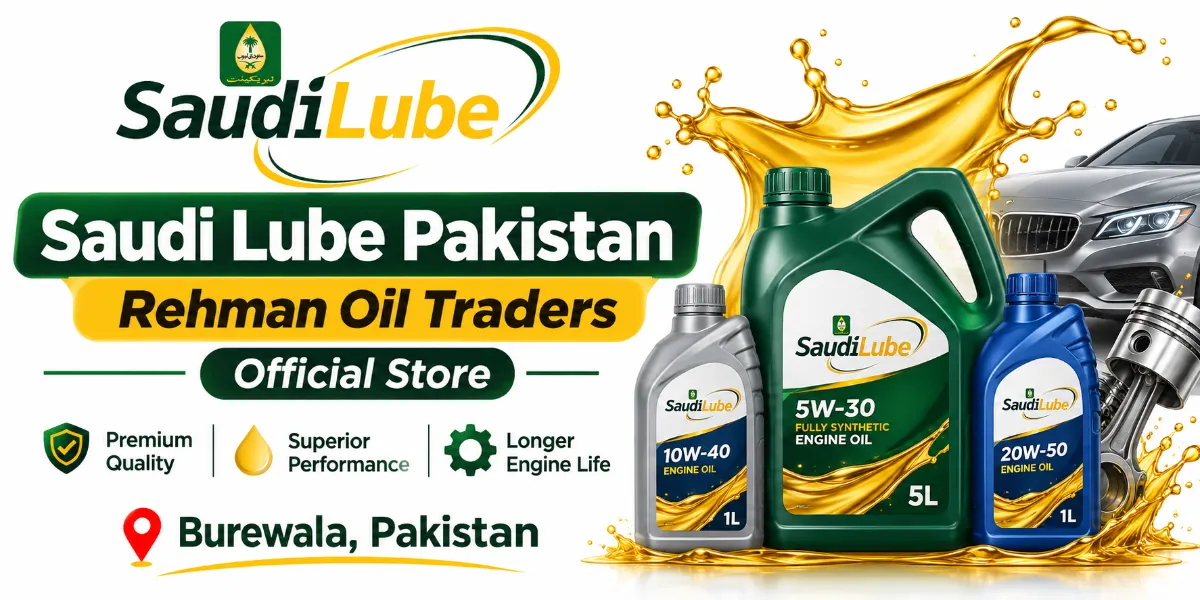
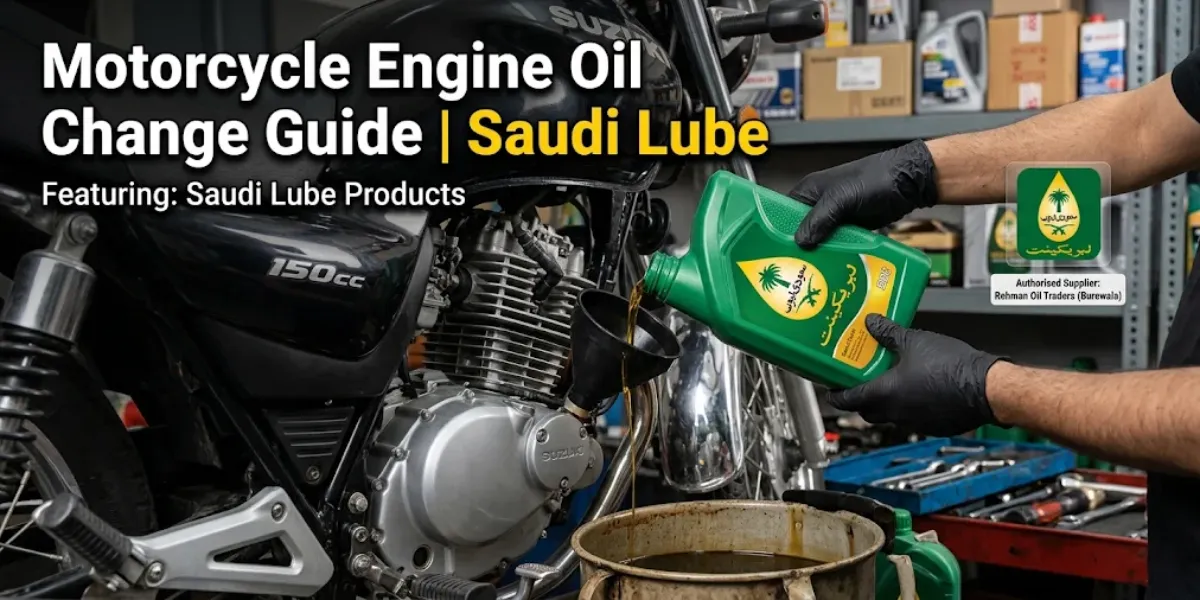
Saudi Lube Motorcycle Engine Oil – Rehman Oil Traders
Choosing the right motorcycle engine oil and following a regular maintenance schedule can help support reliable engine operation and long-term maintenance.
Saudi Lube offers motorcycle engine oil options designed for different requirements, including:
Saudi Lube SL-Sumama API SG SAE 20W-50
Saudi Lube SL-Sumama API SF SAE 20W-40
Available pack sizes include 1-litre and 700-ml options, subject to stock availability. Before purchasing, confirm the viscosity grade and performance classification required by your motorcycle.
Rehman Oil Traders provides Saudi Lube product information and purchase enquiries from Burewala, Punjab, Pakistan. Customers can contact the business to ask about product availability, packaging and delivery arrangements.
Business: Rehman Oil Traders
Brand: Saudi Lube
Location: Burewala, Punjab, Pakistan
Website: https://www.rehmanoiltraders.com
Phone / WhatsApp: +92 310 0068195
Email: contact@rehmanoiltraders.com
For product details and enquiries, visit www.rehmanoiltraders.com or contact Rehman Oil Traders directly.
Delivery arrangements and charges depend on the order weight and delivery location. Customers who prefer to collect their products may also contact the business to discuss warehouse collection.
Maintain your motorcycle with the correct engine oil, follow the recommended service schedule and choose a product that meets your manufacturer's specifications.