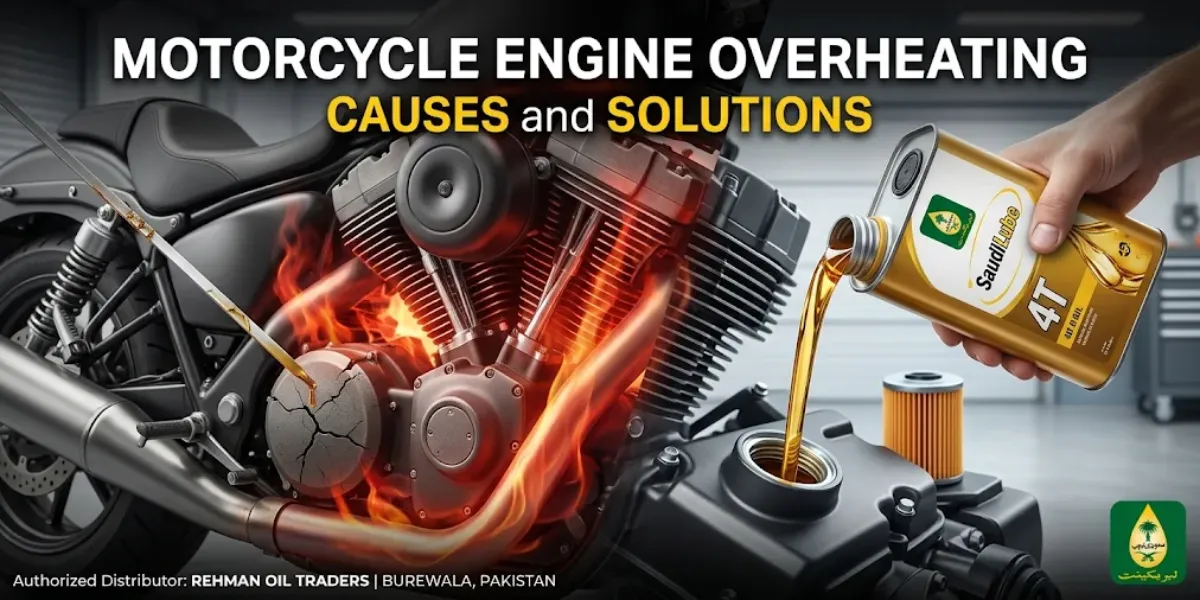

Why Does a Motorcycle Engine Overheat?
Motorcycle engine overheating is a common concern for riders, particularly when travelling in hot weather, riding through heavy traffic, or using a motorcycle for long journeys. An engine naturally produces heat while running, but excessive heat can affect performance, increase engine wear, and potentially cause serious mechanical damage if ignored.
A motorcycle engine can overheat for several reasons, including insufficient engine oil, unsuitable lubrication, cooling system problems, incorrect fuel mixture, and mechanical faults. Identifying the actual cause is important because adding or changing engine oil alone may not resolve every overheating problem.
Whether you ride a daily-use motorcycle, commute long distances, or use your bike for commercial purposes, understanding the warning signs and following proper maintenance practices can help protect your engine.
1. Why Does a Motorcycle Engine Get Too Hot?
A motorcycle engine burns fuel to generate power. During this process, heat is produced through combustion and friction between moving components. The engine is designed to operate within a suitable temperature range.
The cooling system and engine lubrication work together to manage this heat. Depending on the motorcycle design, heat is released through air circulation, engine oil, coolant, or a combination of these systems.
When heat is produced faster than the motorcycle can remove it, the engine temperature may rise excessively.
Some motorcycles are designed with air-cooled engines, while others use oil cooling or liquid cooling. Therefore, the causes and solutions can differ depending on the motorcycle model.
2. Low Engine Oil Level
One of the important reasons a motorcycle engine may experience excessive heat is an insufficient engine oil level.
Engine oil performs several essential functions. It lubricates moving components, reduces friction, helps carry heat away from certain engine parts, and protects internal surfaces against excessive wear.
When the oil level becomes too low, some engine components may not receive adequate lubrication. Increased friction can contribute to additional heat and accelerated wear.
Common signs of low engine oil include:
Unusual engine noise.
Increased engine temperature.
Reduced engine smoothness.
Excessive engine wear.
Oil warning indicators on motorcycles equipped with them.
Riders should check engine oil regularly according to the motorcycle manufacturer's instructions. If the oil level is low, identify why it has decreased instead of simply continuing to ride.
Oil leakage, worn engine components, and excessive oil consumption can all contribute to a falling oil level.
3. Using the Wrong Engine Oil
Choosing an unsuitable engine oil can affect motorcycle lubrication and overall engine operation.
Every motorcycle has specific lubrication requirements. Manufacturers recommend particular viscosity grades and performance specifications based on engine design, operating conditions, and clutch requirements.
For example, some motorcycles require SAE 20W-50, while others may require SAE 10W-40 or another viscosity grade.
Using an oil that does not meet the manufacturer's recommendations may affect lubrication under different operating temperatures.
Motorcycle owners should consider:
Required API performance category.
Whether the motorcycle uses a wet clutch.
Manufacturer-specific oil requirements.
The operating conditions of the motorcycle.
It is important not to assume that thicker engine oil will automatically reduce overheating. Oil that is too thick for a particular engine may not circulate as intended, particularly during cold starts.
Always check the owner's manual before selecting motorcycle engine oil.
4. Cooling System Problems
The cooling system plays an important role in controlling motorcycle engine temperature. However, not every motorcycle uses the same cooling technology.
Air-cooled motorcycles
Air-cooled motorcycles use airflow around the engine and cooling fins to release heat. If these fins become covered with dirt, mud, or other debris, heat transfer may become less effective.
Prolonged operation in heavy traffic can also reduce airflow around the engine.
Oil-cooled motorcycles
Oil-cooled motorcycles use engine oil to help remove heat from certain engine areas. Depending on the design, they may have an oil cooler that helps reduce oil temperature.
Blocked oil cooler passages, restricted airflow, or lubrication problems may affect cooling performance.
Liquid-cooled motorcycles
Liquid-cooled motorcycles use coolant circulating through the engine and radiator. A problem in this system can cause the engine temperature to rise.
Possible issues include:
Low coolant level.
Coolant leakage.
Faulty radiator fan.
Damaged radiator.
Blocked radiator passages.
Faulty thermostat.
Water pump problems.
If a liquid-cooled motorcycle overheats repeatedly, the cooling system should be inspected by a qualified mechanic.
Never remove a radiator cap while the engine is hot. Pressurised coolant can cause severe burns.
5. Riding in Heavy Traffic and Hot Weather
Environmental conditions and riding habits can also affect motorcycle temperature.
In Pakistan, motorcycles are frequently used during hot summer conditions. Riders may travel through congested roads where vehicles move slowly or remain stationary for extended periods.
This can reduce airflow around air-cooled engines. In liquid-cooled motorcycles, the radiator fan becomes particularly important when the motorcycle is moving slowly or standing still.
High temperatures combined with prolonged engine operation can increase the cooling system's workload.
Helpful riding practices include:
Avoid unnecessary prolonged idling.
Take suitable breaks during long journeys.
Maintain a reasonable riding speed.
Keep the motorcycle's cooling system in good condition.
Avoid carrying excessive loads beyond the motorcycle's capacity.
Follow the manufacturer's maintenance schedule.
If the motorcycle starts showing signs of excessive heat, do not continue riding simply to reach your destination.
6. Incorrect Fuel Mixture
The air-fuel mixture also affects engine temperature and combustion performance.
A motorcycle engine requires an appropriate balance of air and fuel. If the mixture becomes excessively lean, meaning there is too much air relative to fuel, combustion temperatures may increase under certain operating conditions.
Possible reasons include:
Carburettor adjustment problems.
Fuel injector issues.
Blocked fuel passages.
Air leaks in the intake system.
Faulty sensors in fuel-injected motorcycles.
Restricted fuel supply.
Incorrect fuel mixture can also lead to poor acceleration, rough idling, reduced performance, and unusual engine behaviour.
If overheating occurs alongside these symptoms, have the fuel system inspected rather than attempting random adjustments.
7. Dirty Air Filter
The air filter prevents dust and other particles from entering the engine.
Motorcycles used on dusty roads may accumulate dirt in their air filters more quickly. A heavily restricted air filter can affect airflow and engine performance.
Depending on the engine and fuel system, restricted airflow may disturb the air-fuel mixture and contribute to poor combustion.
A dirty air filter may cause:
Reduced acceleration.
Poor fuel economy.
Rough engine operation.
Reduced engine performance.
Unusual engine response.
Inspect and clean or replace the air filter according to the manufacturer's recommended service schedule.
8. Excessive Engine Load
A motorcycle engine can generate additional heat when operated under heavy load for extended periods.
Examples include:
Riding uphill for long periods.
Continuous high-speed riding.
Frequent acceleration under heavy load.
Operating in unsuitable gears.
Using the correct gear for the riding conditions helps the engine operate more comfortably. Avoid forcing the motorcycle to accelerate in a gear that is too high for its speed.
For long journeys, maintain a steady and appropriate riding style rather than continuously operating the engine at excessive speeds.
9. Mechanical Problems Inside the Engine
Sometimes motorcycle overheating is caused by internal mechanical problems.
These faults require professional inspection because they may not be resolved through routine oil replacement or basic maintenance.
Possible mechanical causes include:
Worn piston rings.
Damaged cylinder walls.
Incorrect valve clearance.
Excessive internal friction.
Bearing problems.
Incorrect ignition timing.
Poor engine compression.
Mechanical problems may also cause reduced power, unusual noises, excessive smoke, difficult starting, or increased oil consumption.
If overheating continues despite correct oil levels and a functioning cooling system, arrange a proper mechanical inspection.
10. Warning Signs of Motorcycle Engine Overheating
Recognising early warning signs can help prevent further damage.
Common symptoms include:
Unusually high engine temperature: The engine feels significantly hotter than normal or the temperature warning indicator activates.
Loss of engine power: The motorcycle may feel less responsive, particularly during acceleration.
Unusual engine noise: Knocking, ticking, or other abnormal sounds may indicate a lubrication or mechanical problem.
Burning smell: An unusual smell may indicate excessive heat, leaking oil contacting hot components, or another mechanical issue.
Coolant leakage: Liquid around the radiator, hoses, or engine may indicate a cooling system problem.
Frequent overheating: If the motorcycle repeatedly becomes too hot, the underlying cause needs professional attention.
Remember that an engine normally becomes hot during operation. The concern is excessive temperature accompanied by warning indicators, abnormal behaviour, or other symptoms.
11. What Should You Do When Your Motorcycle Overheats?
Taking the correct steps when your motorcycle overheats can help reduce the risk of damage.
Follow these precautions:
Stop safely: Move away from traffic and switch off the engine when it is safe to do so.
Allow the engine to cool: Do not immediately touch hot engine components or attempt repairs while the motorcycle is hot.
Check the oil level: Once it is safe, check the engine oil according to the manufacturer's instructions.
Inspect for leakage: Look for signs of oil or coolant leakage without touching hot components.
Check the cooling system: If your motorcycle is liquid-cooled, have the coolant level, radiator, fan, and hoses checked.
Seek professional help: If the temperature rises again or the engine makes unusual noises, avoid further riding until the problem has been inspected.
Do not pour cold water directly onto a very hot engine. Sudden temperature changes may damage components.
Do not open a hot radiator cap because pressurised coolant can cause serious injuries.
12. How to Prevent Motorcycle Engine Overheating
Regular maintenance is one of the best ways to reduce the risk of overheating.
A motorcycle that receives timely servicing is more likely to maintain proper lubrication, cooling, and engine performance.
Here are some useful maintenance practices:
Change engine oil on time
Follow the oil replacement interval recommended by the manufacturer. The correct interval may depend on the motorcycle model, riding conditions, and type of oil used.
Use the recommended oil grade
Always select engine oil that meets the manufacturer's viscosity and performance requirements.
Check oil levels regularly
Do not wait until an engine warning light appears. Check the level using the correct procedure.
Maintain the cooling system
For air-cooled motorcycles, keep cooling fins clean. For liquid-cooled motorcycles, inspect coolant, radiator, hoses, and the cooling fan.
Clean the air filter
A properly maintained air filter supports suitable airflow and engine operation.
Get regular servicing
Have the spark plug, fuel system, valve clearance, and other important components inspected according to the service schedule.
Avoid excessive engine load
Use appropriate gears and avoid continuously operating the engine under unnecessary stress.
13. Why Is Choosing Quality Motorcycle Engine Oil Important?
Engine oil is essential for protecting motorcycle engine components against friction and wear.
During normal operation, internal engine parts move at high speeds and experience significant mechanical stress. Suitable lubrication helps create a protective film between moving surfaces.
Quality engine oil, when it meets the motorcycle manufacturer's requirements, supports:
Protection against excessive wear.
Better lubrication during engine operation.
Removal of certain contaminants through the oil system.
Heat transfer from lubricated engine components.
More consistent engine operation.
However, engine oil is only one part of motorcycle maintenance. It cannot repair a damaged radiator, blocked cooling passage, faulty fan, incorrect fuel mixture, or internal mechanical problem.
Selecting the correct oil grade and replacing it at the recommended intervals are important steps in maintaining a motorcycle.
14. Saudi Lube Motorcycle Engine Oil
Motorcycle owners should select engine oil according to their motorcycle's manufacturer recommendations rather than choosing a product based only on price or viscosity.
Saudi Lube motorcycle engine oil options available through Rehman Oil Traders include:
SL-Sumama API SG SAE 20W-50
SL-Sumama API SF SAE 20W-40
These products are listed in 1-litre and 700ml packaging options.
Before purchasing, check your motorcycle's owner's manual to confirm the recommended viscosity and API performance category. The correct selection depends on the motorcycle's engine design and manufacturer requirements.
Rehman Oil Traders provides product information and enquiries for customers interested in Saudi Lube motorcycle engine oil.
15. Final Thoughts
Motorcycle engine overheating should never be ignored, particularly when it happens repeatedly or is accompanied by unusual engine noises, reduced power, warning lights, or coolant leakage.
The problem may be caused by low engine oil, unsuitable lubrication, restricted airflow, cooling system faults, incorrect fuel mixture, excessive engine load, or internal mechanical issues.
The best approach is to identify the actual cause instead of assuming that changing engine oil will solve everything.
Regular servicing, correct engine oil selection, proper cooling system maintenance, and responsible riding habits can all contribute to longer engine life and more reliable motorcycle performance.
For Saudi Lube motorcycle engine oil enquiries, contact Rehman Oil Traders using the details below.
Saudi Lube – Rehman Oil Traders
Business Name: Rehman Oil Traders
Brand: Saudi Lube
Location: Burewala, Punjab, Pakistan
Website: https://www.rehmanoiltraders.com
Phone / WhatsApp: +92 310 0068195
Email: contact@rehmanoiltraders.com
Explore Saudi Lube motorcycle engine oil options and contact Rehman Oil Traders for product details and availability.
Shipping Information: Delivery arrangements and charges depend on the order weight and delivery location. Customers can also contact Rehman Oil Traders to discuss collecting their orders from the warehouse.
Visit: www.rehmanoiltraders.com