
What Are API Engine Oil Ratings and Why Do They Matter?
Engine oil plays an essential role in protecting an engine, reducing friction, controlling heat and supporting smooth vehicle operation. However, choosing engine oil is not only about selecting the correct viscosity grade, such as 5W-30, 10W-40 or 20W-50. You must also consider the oil's performance classification.
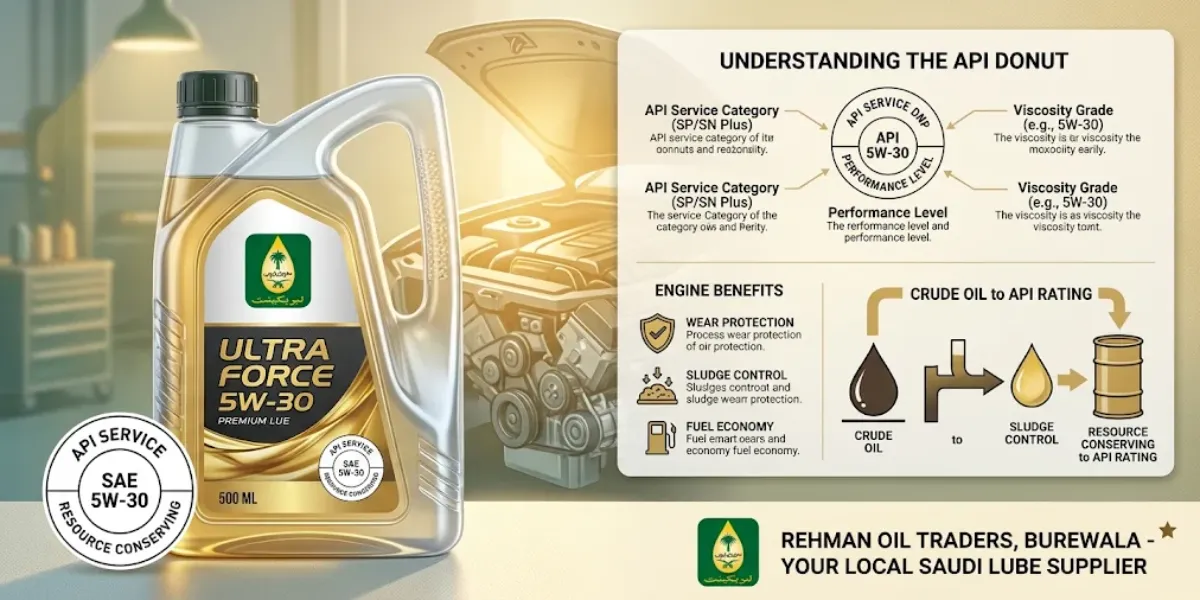
This is where API engine oil ratings become important. API classifications help drivers, vehicle owners, mechanics and workshop operators understand the performance category an engine oil is designed to meet. These ratings are commonly printed on engine oil containers and product labels, making them an important part of selecting suitable lubrication for petrol and diesel engines.
If you have ever noticed labels such as API SP, API SN, API SM, API CI-4 or API CH-4 on an engine oil bottle, you may have wondered what these letters and numbers mean. Understanding them can help you make a more informed decision when purchasing engine oil for your car, motorcycle or diesel vehicle.
What Does API Stand For?
API stands for the American Petroleum Institute, an organisation that develops industry standards and classifications for petroleum products, including engine oils.
API engine oil service categories are used to describe performance requirements for different types of engines. They help identify whether an oil is designed for a particular engine application and performance level.
For vehicle owners, these classifications provide useful information when comparing different engine oil products. Instead of choosing oil based only on its brand name or price, you can also check the API classification against the requirements mentioned in your vehicle owner's manual.
For example, an engine oil container may display:
API SP
API SN
API SM
API CI-4
API CH-4
API CF
Each classification represents a particular service category. The correct choice depends on the engine type, manufacturer's recommendations and the oil's stated specifications.
Understanding API S and API C Categories
One of the easiest ways to understand API engine oil ratings is to recognise the two main category prefixes.
1. API S Categories – Petrol Engines
API S categories are associated with petrol engine service classifications. These specifications are commonly found on engine oils intended for cars and other petrol-powered vehicles.
Examples include:
API SP
API SN
API SM
API SL
API SJ
Different API S categories represent different performance requirements and generations of petrol engine oil standards.
For example, Saudi Lube's listed petrol engine oil range includes products with API SP, API SN, API SM and other classifications. These options provide customers with different specifications to consider when selecting oil for compatible petrol engines.
2. API C Categories – Diesel Engines
API C categories are associated with diesel engine service classifications. These ratings are commonly found on engine oils designed for diesel cars, commercial vehicles, trucks, agricultural machinery and other diesel-powered equipment.
Examples include:
API CI-4
API CH-4
API CF-4
API CF
API CE
API CD
The correct diesel engine oil classification depends on the engine design, operating conditions and manufacturer's recommendations. Heavy-duty diesel engines may have different lubrication requirements from smaller diesel passenger vehicles.
Saudi Lube offers diesel engine oil options carrying several listed API classifications, including CI-4, CH-4, CF-4 and other categories. Customers should check the specific product label and vehicle requirements before choosing a product.
What Do API Letters and Numbers Mean?
API classifications use letters and numbers to distinguish between service categories.
For example, API SP and API SN belong to the petrol engine service category, while API CI-4 and API CH-4 belong to the diesel engine service category.
The letters and numbers are not viscosity grades. They identify the oil's service classification and performance requirements.
This distinction is important because viscosity and API classification provide different types of information.
Consider these examples:
SAE 5W-30: Describes the oil's viscosity grade.
API SP: Identifies its petrol engine service category.
SAE 15W-40: Describes the oil's viscosity grade.
API CI-4: Identifies its diesel engine service category.
An engine oil can therefore have both an SAE viscosity grade and an API service classification. You should check both when selecting oil for your vehicle.
Why Are API Engine Oil Ratings Important?
Checking API ratings before purchasing engine oil can help you avoid choosing a product that does not match your engine's requirements.
Here are some important reasons to understand these classifications.
1. Helps You Select Suitable Engine Oil
Every engine is designed with particular lubrication requirements. The manufacturer's recommended oil specification helps determine which products are appropriate.
Checking the API classification allows you to compare the oil's stated service category with the specification recommended for your vehicle.
2. Helps Identify Petrol and Diesel Engine Oil
API classifications make it easier to distinguish between petrol and diesel engine oil applications.
For example, API SP is a petrol engine service category, whereas API CI-4 is a diesel engine service category. These classifications should not be treated as interchangeable.
3. Helps You Compare Different Products
Two engine oils may have the same viscosity grade but different API classifications.
For example, two products labelled SAE 10W-40 may have different service categories. This means that checking viscosity alone may not provide all the information you need.
Looking at both SAE and API specifications gives you a clearer understanding of the product.
4. Supports Informed Purchasing Decisions
Engine oil is an important maintenance product, and choosing it carefully can help you follow the manufacturer's recommended maintenance requirements.
API classifications provide an additional reference when comparing products from different brands and suppliers.
5. Helps Avoid Incorrect Oil Selection
Using an oil that does not meet the required specification may be unsuitable for your engine. This is why you should never select engine oil based only on price, packaging or viscosity.
Always check the owner's manual and product specifications before making a purchase.
Is a Higher or Newer API Rating Always Better?
Many vehicle owners assume that a newer API category is automatically the best option for every vehicle. However, this is not always correct.
Newer API service categories generally reflect updated performance requirements for the engine applications they cover. Some newer petrol engine oil categories may also be backward compatible with certain earlier petrol engine requirements.
However, compatibility depends on the particular specification and engine application. Older, specialised or heavy-duty engines may require a specific category that should not be replaced without checking the manufacturer's recommendations.
For this reason, do not choose engine oil simply because its API letters appear newer. Confirm the required category, viscosity and any additional manufacturer approvals.
What Is the Difference Between API Rating and SAE Viscosity?
API classification and SAE viscosity are two different specifications that work together to describe engine oil.
SAE viscosity explains how the oil flows at different temperatures. Common viscosity grades include:
0W-20
5W-30
10W-30
10W-40
15W-40
20W-50
API classification indicates the service category and performance requirements associated with the oil.
For example, Saudi Lube has listed petrol engine oil options including:
SL-GASO-1 – API SP, SAE 0W-20
SL-Gaso-5 – API SP, SAE 5W-30
SL-Gaso-4 – API SN, SAE 10W-40
SL-Gaso-3 – API SM, SAE 10W-30
Gasoline Engine Oil – API SG, SAE 20W-50
These examples show why it is important to check both specifications. An oil's viscosity grade alone does not tell you its complete performance classification.
How to Check the API Rating on an Engine Oil Bottle
Checking the API classification is generally straightforward. Most engine oil manufacturers print the relevant information on the front or back label.
Follow these steps:
Find the product label: Look for the specifications section on the engine oil container.
Check the API classification: Identify the letters and numbers printed after API.
Check the SAE grade: Find the viscosity specification, such as 5W-30 or 20W-50.
Compare with your owner's manual: Confirm that the API category and viscosity meet your vehicle manufacturer's requirements.
Check the product information: If you are unsure, ask the supplier or manufacturer to clarify the specifications.
Do not confuse an API classification with a brand name, product model or viscosity grade. Each provides different information.
Common API Classifications Found in Saudi Lube Products
Saudi Lube's listed engine oil range includes several petrol, motorcycle and diesel engine oil classifications.
Petrol Engine Oil
Some listed petrol engine oil specifications include:
| Product | Listed API Classification | SAE Grade |
|---|---|---|
| SL-GASO-1 | API SP | 0W-20 |
| SL-Gaso-5 | API SP | 5W-30 |
| SL-Gaso-4 | API SN | 10W-40 |
| SL-Gaso-3 | API SM | 10W-30 |
| Gasoline Engine Oil | API SG | 20W-50 |
Diesel Engine Oil
Saudi Lube's listed diesel engine oil options include:
| Product | Listed API Classification | SAE Grade |
|---|---|---|
| SL-Diesel 6000 | API CI-4 | 15W-40 |
| SL-Diesel 5000 | API CH-4 | 20W-50 |
| SL-Diesel 4500 | API CF-4/SJ | 20W-50 |
| SL-Diesel 4000 | API CF | 20W-50 |
| SL-Diesel 3000 | API CE/SD | 20W-50 |
| SL-Diesel 2500 Plus | API CF | SAE 50 |
| SL-Diesel 2500 | API SD/CD | SAE 50 |
| SL-Diesel 2000 | API SC/CC | SAE 50 |
| HD 50 | API SC/CC | SAE 50 |
| Zait-Ul-Jadeed | API SC/CC | SAE 50 |
These are the listed product specifications and should be checked against the actual container label and the requirements of your engine. Product availability and packaging may vary.
Common Mistakes When Choosing Engine Oil
Even experienced vehicle owners sometimes make mistakes when selecting engine oil. Understanding API ratings can help prevent some of these issues.
Choosing Oil Only by Viscosity
Selecting 10W-40 or 20W-50 does not automatically mean the oil is suitable for your engine. You must also check its API service classification.
Ignoring the Owner's Manual
Your vehicle manufacturer's recommendations should always be the starting point. The recommended API category and SAE grade are important when choosing engine oil.
Assuming All Petrol and Diesel Oils Are the Same
Petrol and diesel engines can have different lubrication requirements. Always check whether the oil is designed for the intended engine application.
Selecting Oil Only Because It Is Cheaper
Price should not be the only deciding factor. Consider the required specifications, product information, packaging and supplier reliability.
Assuming Every Newer Rating Fits Every Older Engine
A newer classification is not automatically suitable for every older or specialised engine. Check compatibility before changing specifications.
How Often Should You Check Your Engine Oil?
Understanding API classifications is only one part of proper engine maintenance. Regularly checking your engine oil is also important.
You should follow the inspection and oil replacement intervals recommended by your vehicle manufacturer. These intervals may vary depending on the vehicle model, engine condition, driving habits and operating environment.
As part of routine maintenance:
Check the engine oil level according to the owner's manual.
Look for unusual changes in oil level.
Inspect for visible oil leaks.
Use the recommended viscosity and service category.
Replace the oil filter when required.
Keep a record of oil changes and maintenance.
If you notice an oil warning light, unusual engine noise or a sudden drop in oil level, have the vehicle inspected promptly.
Frequently Asked Questions
What does API SP mean?
API SP is a petrol engine oil service category designed to meet specified performance requirements. Always check whether it is appropriate for your particular engine.
What does API SN mean?
API SN is an earlier petrol engine service category. Its suitability depends on the vehicle manufacturer's requirements and applicable compatibility guidance.
What does API CI-4 mean?
API CI-4 is a diesel engine oil service category associated with particular heavy-duty diesel engine requirements. Check your engine manufacturer's recommendations before selecting it.
Are API S and API C classifications interchangeable?
No. API S categories are associated with petrol engine service classifications, while API C categories are associated with diesel engine service classifications. Select oil according to the intended engine application.
Is API rating the same as SAE grade?
No. API identifies the service classification, while SAE describes the oil's viscosity grade. Both should be checked when selecting engine oil.
Can I use API SP oil in an older petrol car?
It may be suitable for some older petrol engines, but compatibility should not be assumed for every vehicle. Check the owner's manual and manufacturer's specifications.
Does API rating affect engine performance?
The correct oil specification helps ensure that the lubricant meets the engine's stated requirements. However, actual engine performance also depends on engine condition, maintenance, oil viscosity and operating conditions.
Where can I find Saudi Lube engine oil specifications?
You can explore Saudi Lube products and contact Rehman Oil Traders for information about available engine oil options and their listed specifications.
Saudi Lube Engine Oils – Rehman Oil Traders, Pakistan
Choosing the correct engine oil is an important part of maintaining your vehicle. Understanding API classifications, SAE viscosity grades and manufacturer recommendations can help you make a more informed purchasing decision.
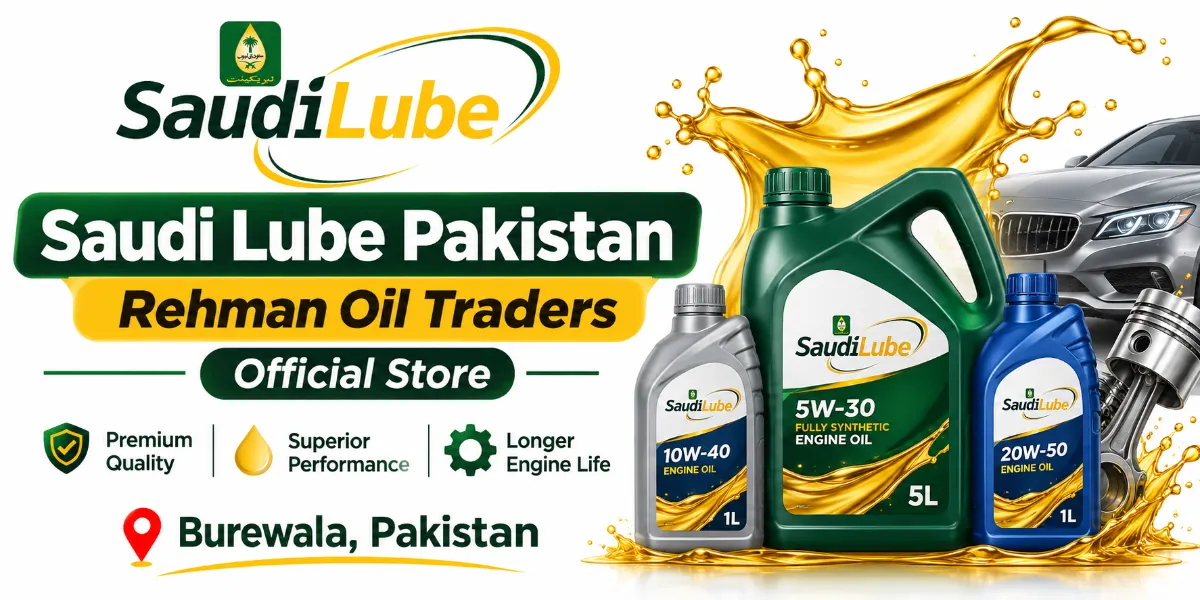
Saudi Lube offers listed engine oil options for different applications, including petrol engines, diesel engines and motorcycles. Its product range includes different viscosity grades and API classifications to suit various stated requirements.
Rehman Oil Traders provides Saudi Lube product enquiries and customer assistance from Burewala, Punjab, Pakistan. Whether you are looking for petrol engine oil, diesel engine oil or motorcycle engine oil, you can contact the team to check product specifications and availability.
Business: Rehman Oil Traders
Brand: Saudi Lube
Location: Burewala, Punjab, Pakistan
Website: https://www.rehmanoiltraders.com
Phone / WhatsApp: +92 310 0068195
Email: contact@rehmanoiltraders.com
For delivery arrangements, charges depend on the order weight and delivery location. Customers can also contact the team to discuss collecting their orders from the warehouse.
Visit www.rehmanoiltraders.com to explore Saudi Lube engine oil products and contact Rehman Oil Traders for enquiries.
Choose engine oil by checking its specifications, not just its name or price. The correct API classification and viscosity grade should always match your vehicle manufacturer's requirements.